
Brasil CVM Resolutions 217, 218 - Achieve Compliance with SINAI
Simplify Sustainability Reporting and Ensure Compliance with Brazilian CVM Resolutions and IFRS Standards
Talk to Us
Brazil’s CVM Resolutions 217 and 218 set new standards for sustainability reporting, in alignment with ISSB international frameworks.
Companies must disclose material sustainability risks, climate-related impacts, and greenhouse gas (GHG) emissions starting January 2026.
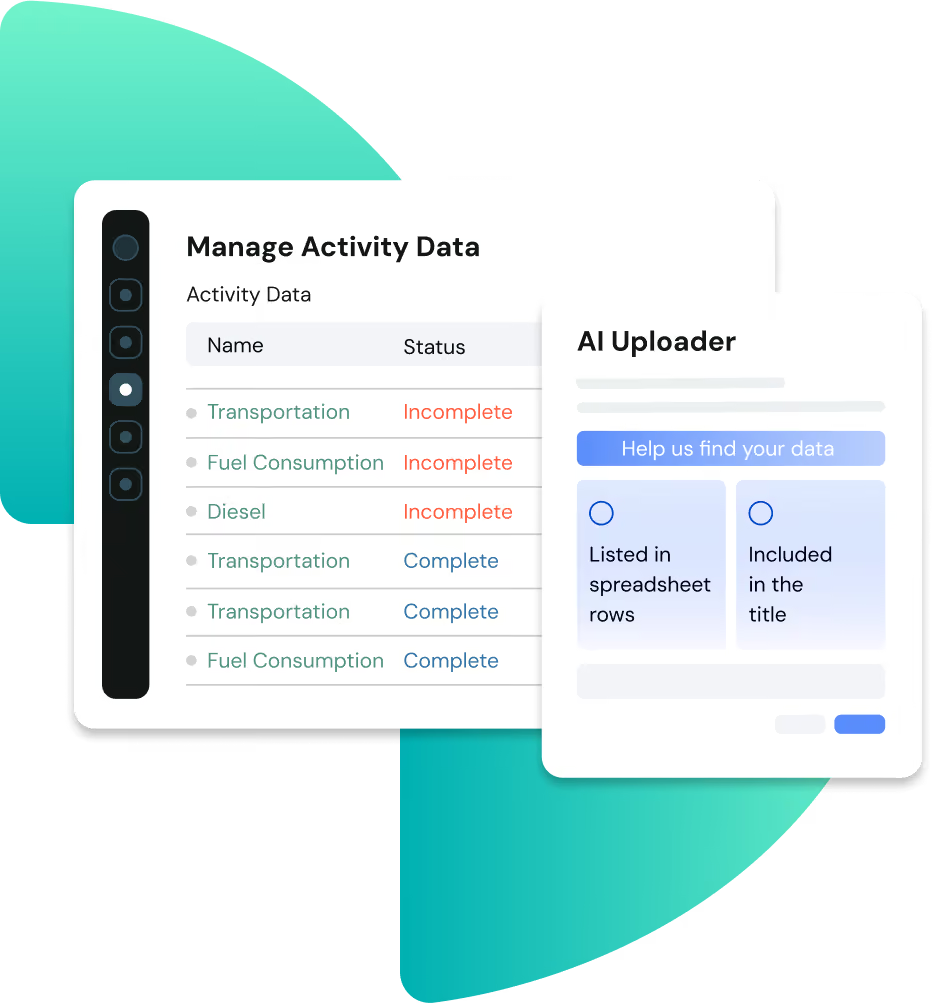
Advanced Data Management
Automate data collection and ensure accuracy across ESG and climate metrics. SINAI's platform centralizes data from multiple sources, reducing manual input errors and ensuring data consistency.
The automated workflows enable real-time data validation, making it easier to maintain data integrity and meet compliance deadlines.
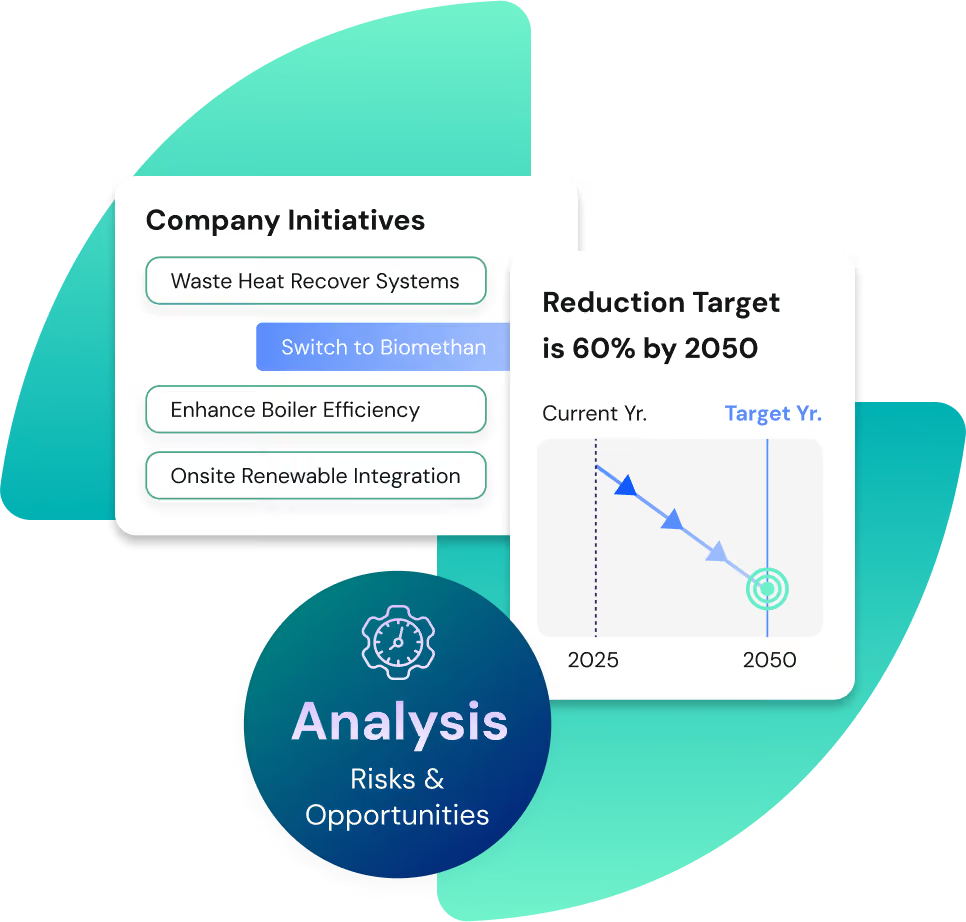
Risk & Opportunity Analysis
Identify, assess, and manage sustainability risks in line with IFRS S1. SINAI provides advanced risk modeling tools that help companies uncover hidden vulnerabilities and potential growth areas.
Our analytics engine evaluates ESG risks and opportunities across business units, supply chains, and operations.
What are Brazil CVM 217 and 218?
As of 2024, Brazil’s CVM Resolutions 217 and 218 set new standards for sustainability reporting, aligning with international frameworks from the ISSB. Companies must disclose material sustainability risks, climate-related impacts, and greenhouse gas (GHG) emissions starting January 2026.
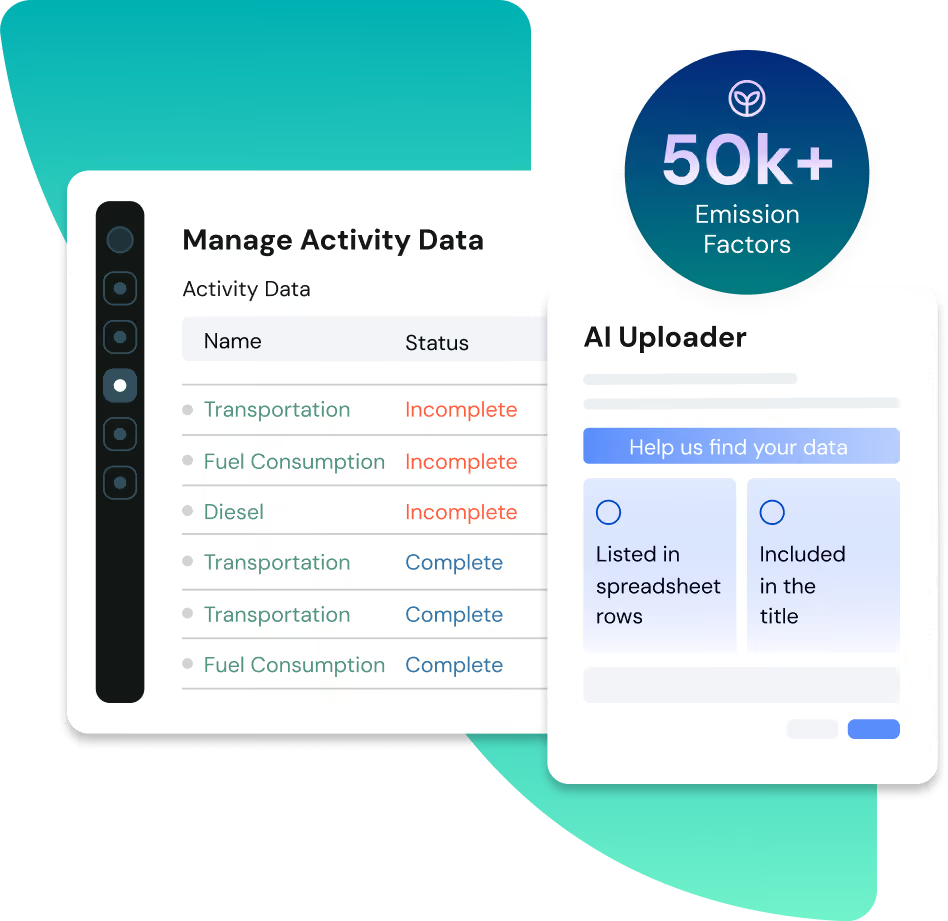
Comprehensive GHG Accounting and Reporting
Track emissions across Scope 1, 2, and 3, meeting CVM 218 and IFRS S2 requirements. SINAI simplifies GHG accounting with automated tracking, customizable emission factors, and built-in methodologies compliant with international standards.
ScenarioAnalysis Tools
Model climate-related risks and opportunities under different scenarios. SINAI's dynamic scenario analysis feature allows businesses to simulate the financial impact of various climate policies, market shifts, and environmental changes.
Users can stress-test their strategies against best- and worst-case scenarios to enhance resilience planning.
.avif)
Ready to Simplify and Comply with Your CVM Reporting?
Talk to UsReal Impact, Real Stories
See how leading organizations are leveraging SINAI’s Climate Transition Planner to achieve their sustainability goals.


With SINAI, Minerva consolidated their carbon management initiatives, covering Scope 1, 2, and 3 emissions. The platform enabled bulk data uploads, advanced scenario modeling, and financial feasibility analysis. These features allowed Minerva to build a dynamic database of projects and maintain continuity in their decarbonization strategy.


Optimus Steel partnered with SINAI to replace spreadsheet-based carbon accounting with a centralized, auditable GHG management platform. With SINAI, this transition enabled the digitization of scopes 1, 2, and 3 emissions over the last five years, and supported an inventory structure for product carbon footprint (PCF) calculations.


'%3e%3cg id='Final-Copy-2_2_' transform='translate(1275.000000, 200.000000)'%3e%3cpath class='st0' d='M7.4,12.8h6.8l3.1-11.6H7.4C4.2,1.2,1.6,3.8,1.6,7S4.2,12.8,7.4,12.8z'/%3e%3c/g%3e%3c/g%3e%3c/g%3e%3cg id='final---dec.11-2020'%3e%3cg id='_x30_208-our-toggle' transform='translate(-1275.000000, -200.000000)'%3e%3cg id='Final-Copy-2' transform='translate(1275.000000, 200.000000)'%3e%3cpath class='st1' d='M22.6,0H7.4c-3.9,0-7,3.1-7,7s3.1,7,7,7h15.2c3.9,0,7-3.1,7-7S26.4,0,22.6,0z M1.6,7c0-3.2,2.6-5.8,5.8-5.8 h9.9l-3.1,11.6H7.4C4.2,12.8,1.6,10.2,1.6,7z'/%3e%3cpath id='x' class='st2' d='M24.6,4c0.2,0.2,0.2,0.6,0,0.8l0,0L22.5,7l2.2,2.2c0.2,0.2,0.2,0.6,0,0.8c-0.2,0.2-0.6,0.2-0.8,0 l0,0l-2.2-2.2L19.5,10c-0.2,0.2-0.6,0.2-0.8,0c-0.2-0.2-0.2-0.6,0-0.8l0,0L20.8,7l-2.2-2.2c-0.2-0.2-0.2-0.6,0-0.8 c0.2-0.2,0.6-0.2,0.8,0l0,0l2.2,2.2L23.8,4C24,3.8,24.4,3.8,24.6,4z'/%3e%3cpath id='y' class='st3' d='M12.7,4.1c0.2,0.2,0.3,0.6,0.1,0.8l0,0L8.6,9.8C8.5,9.9,8.4,10,8.3,10c-0.2,0.1-0.5,0.1-0.7-0.1l0,0 L5.4,7.7c-0.2-0.2-0.2-0.6,0-0.8c0.2-0.2,0.6-0.2,0.8,0l0,0L8,8.6l3.8-4.5C12,3.9,12.4,3.9,12.7,4.1z'/%3e%3c/g%3e%3c/g%3e%3c/g%3e%3c/g%3e%3c/svg%3e)