
-2.png)
-2.png)
2025 at SINAI: A Year of Automation + Assurance for Audit-Ready Carbon Accounting
Ready to shift from compliance to competitive advantage?
Book a demo and see how SINAI can help you streamline data, meet requirements, and build stakeholder trust.

If you run carbon accounting and reporting inside a large organization, you feel the tension every cycle: the work is moving quickly—and the data has to hold up under scrutiny.
In 2025, SINAI focused on one clear goal: helping sustainability teams move faster with confidence—by pairing automation with assurance-ready outputs across the platform. Here’s what we shipped in 2025, how it benefits your team, and what we’re building for 2026 as we push toward precision at speed.
Scope 3 at the speed of your business
Scope 3 is still the biggest footprint for most enterprises and the biggest source of friction. Not because teams aren’t capable, but because the inputs are chaotic: inconsistent vendor naming, mixed units, incomplete datasets, and a constant scramble to map the “real world” into something defensible.
That’s why 2025 was a major year for AI-assisted emissions matching and supplier engagement at SINAI.
Scope 3 AI Emissions Match was built to reduce the repetitive grind of data mapping and calculations, so teams can spend more time reviewing what matters and less time reformatting spreadsheets. It’s designed for scale, with confidence-building checkpoints that help you catch issues before they roll into your inventory. The result: more granular carbon accounting, without turning your team into spreadsheet mechanics.
Then we pushed further upstream with Supplier Hub, so collecting better Scope 3 data isn’t a side quest that lives in inbox threads and versioned attachments. Supplier engagement belongs inside the same system you use to measure, report, and reduce—so supplier data becomes traceable, reusable, and easier to defend.
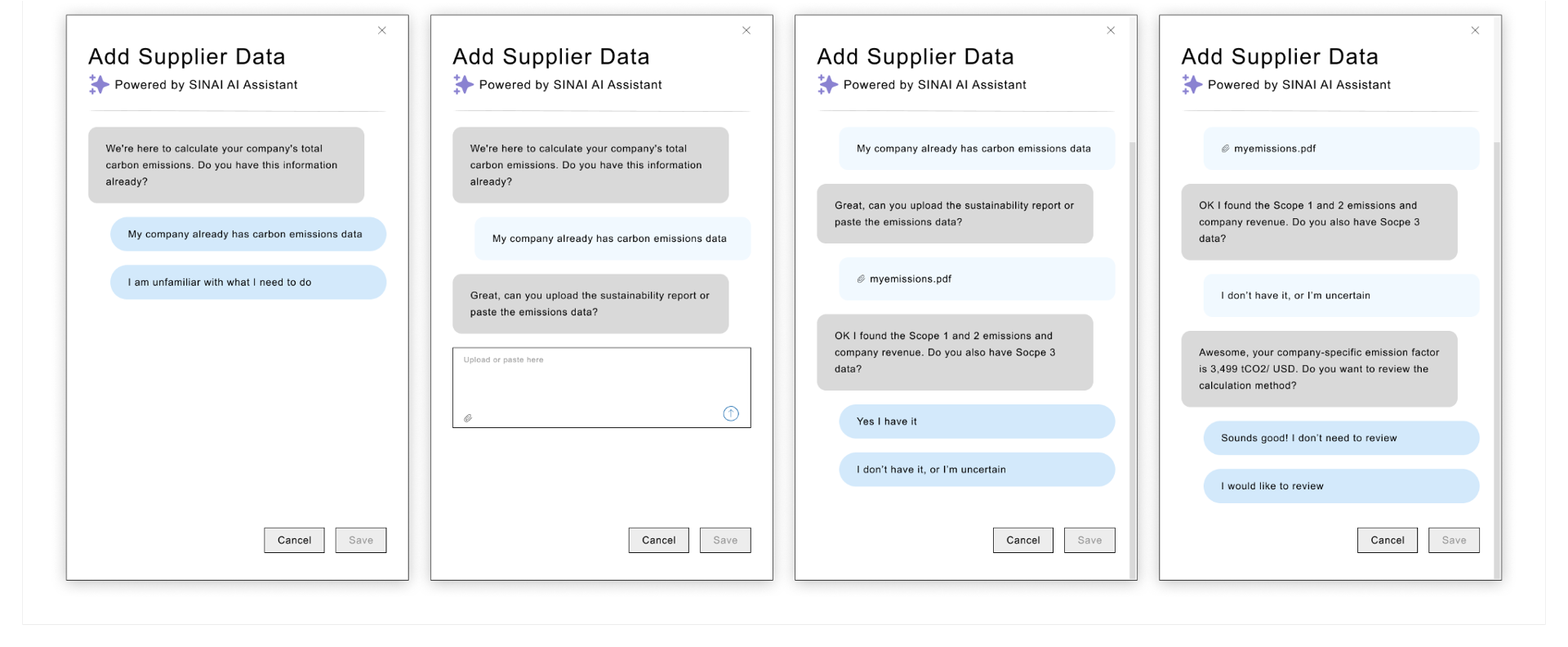
If you’re tired of “Scope 3 season” feeling like a fire drill, this is the shift: faster coverage now, better primary data over time, and a workflow you can sustain across business units.
Turn carbon work into a predictable close
Most reporting pain doesn’t come from methodology. It comes from operations: who owns what, what’s late, what changed, and whether the output is stakeholder-ready.
In 2025, we shipped Bulk + Scheduled Workflows to make carbon operations more structured—so recurring work happens on time, with less manual chasing and fewer dropped handoffs.
We also expanded ESG reporting integrations, such as Workiva, so teams can move outputs into broader reporting systems with less rework and fewer “can you resend this in a different format?” requests.
The goal is simple: audit-ready carbon accounting that’s repeatable—cycle after cycle—even as requirements evolve.
Regulatory-ready emissions workflows
Compliance doesn’t just add reporting. It adds scrutiny, timelines, and real consequences when data is fragmented.
In 2025, we shipped CBAM Reporting to support teams facing carbon-linked trade exposure—and we built it to stay connected to the same underlying emissions data stack you rely on for your broader inventory and decisions.
We also strengthened readiness for Brazil SBCE and California’s Climate Disclosures (SB 253 / SB 261) by delivering report-ready narrative and structured outputs. It all leverages the same GHG data foundation—so compliance doesn’t require a separate process or source of truth.
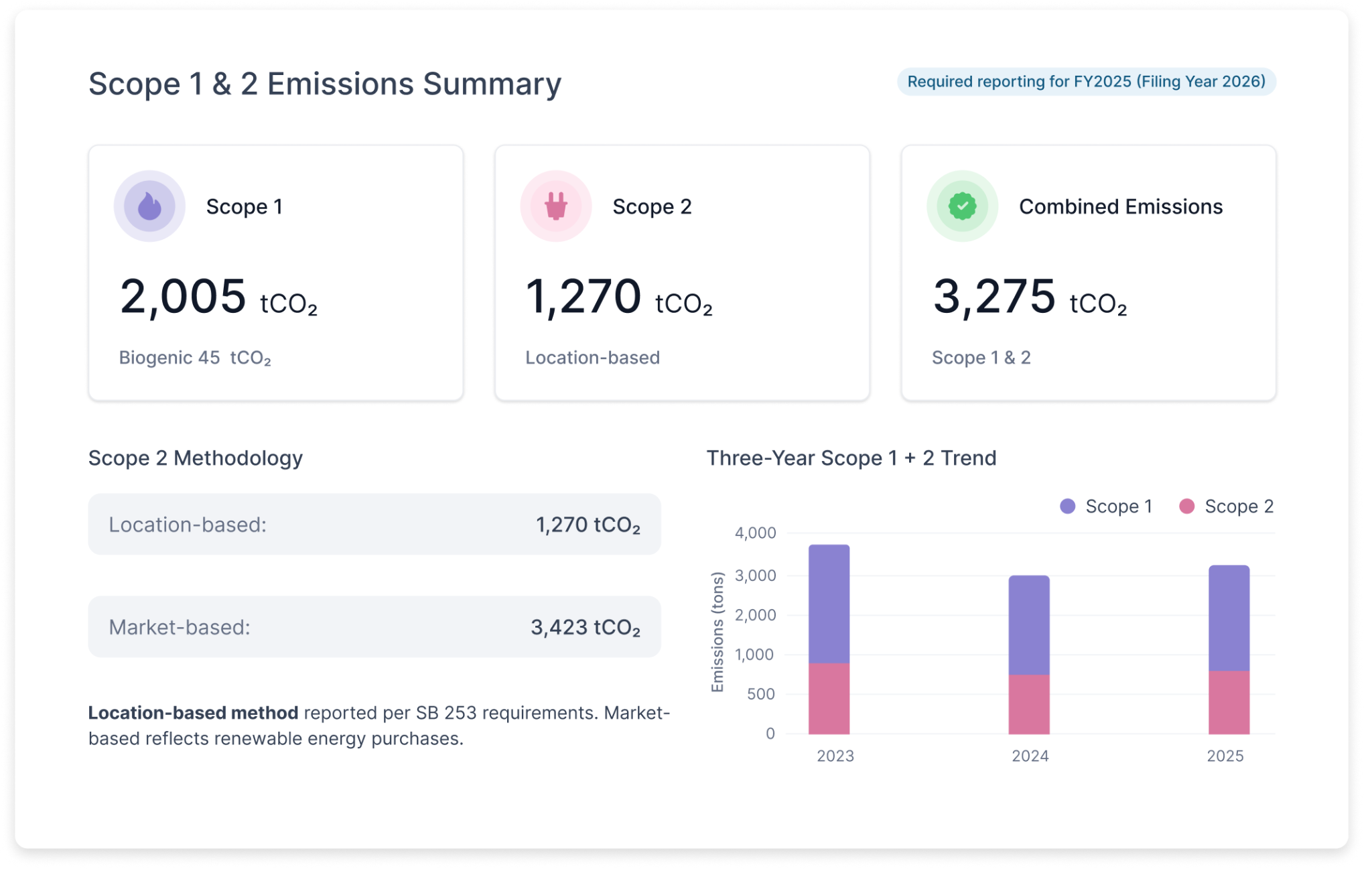
That’s what “regulatory-ready emissions workflows” should look like: fewer tools, fewer reconciliations, faster readiness.
Streamline energy aggregates for your next report
Energy reporting shouldn’t require a separate spreadsheet kingdom.
SINAI now supports total energy aggregation to help you meet reporting requirements across frameworks like CDP, SASB, UK DEFRA, and the Brazil GHG Protocol without extra manual work. That means fewer quarter-end reconciliations, less manual cleanup, and more time acting on insights.The localized pages currently display this paragraph in English, so please check whether the translations also need correction.
A move towards profitable decarbonization
A clean emissions inventory is necessary. It’s not sufficient for companies actually pursuing reduction targets.
In 2025, we pushed hard on the “what next?” layer—because carbon teams are increasingly expected to connect reporting to climate action, and climate action to financials.
AI-generated Transition Plans added roadmap-style visuals so you can move from an emissions inventory to a decarbonization plan that stakeholders actually understand.
- Create a tailored corporate decarbonization plan
- See how reduction scenarios change your targets
- Model cost-effective decarbonization projects
AI-recommended Dcarb Projects help teams prioritize what to do first—so you can build a portfolio that aligns to your emissions data, saving time and ensuring impactful and fundable strategies.
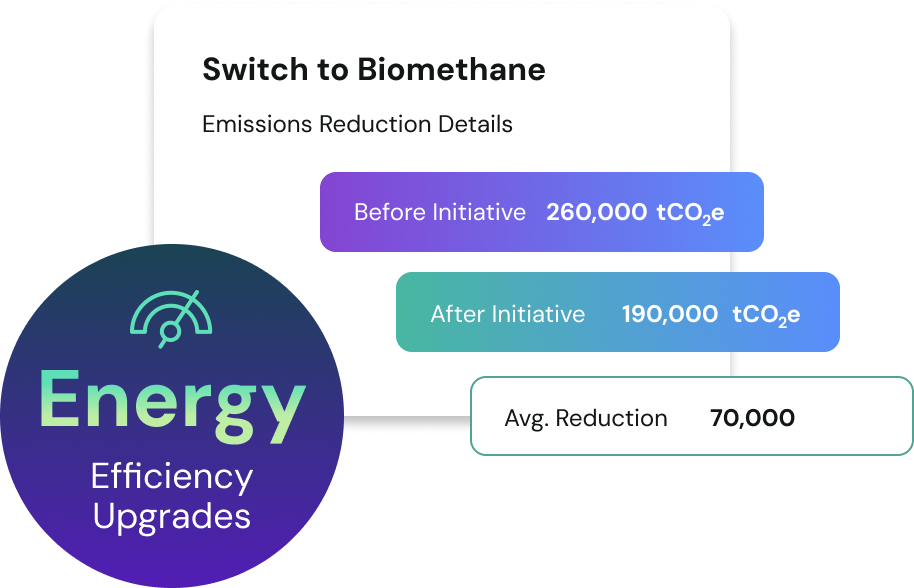
This is the core SINAI approach: measure and report with control, then reduce with a defensible plan.
Verdantix recognizes SINAI (August 2025)
In August 2025, we were excited that SINAI was included in Verdantix’s Smart Innovators: Carbon Management Software report benchmarking innovation across 22 providers.
Verdantix assessed SINAI for market‑leading functionality in target management, transition risk analysis, abatement opportunity identification & implementation, and MACC modeling—with distinct strengths in AI emission calculations and CO₂ emissions forecasting and pathways.
Independent validation matters when your job is to deliver decision-grade outputs under pressure.
2025 by the numbers
2025 was a defining year for SINAI and for the teams building on the platform and we achieved some exciting milestones:
- 560 MtCO2e tracked in-platform—supporting 2025/2026 reporting cycles.
- 12 years of historical inventories captured (back to 2013).
- 1,534 projects modeled to prioritize abatement and guide profitable decarbonization.
- 100,000+ emissions factors updated with 70 models, aligned to major global protocols.
- 100% of third-party verifications cleared through joint customer delivery.
- 15+ new partners added across the US, Brazil, Europe, Central Asia, and the Middle East
2026: precision at speed
In 2026, the theme is straightforward: more granular calculations, smarter QA, and clearer insight.
- Automated utility bill processing is coming to improve completeness and reduce close time.
- We’re expanding AI Emissions Match so more teams can upload real-world files with less manual cleanup and more confident calculations.
- New analytics dashboards will make reviews and stakeholder-ready outputs faster, without the export-and-pivot treadmill.
- We’re also enhancing climate risk insights and peer benchmarking so teams can prioritize what matters, and defend those priorities in the rooms where decisions get made.
Expect a more intuitive starting point and a usability refresh across core workflows—surfacing the right work at the right time, reducing cognitive load, and keeping non-specialists moving.
Closing out 2025 with measurable climate impact
As we close out 2025, we’re investing not only in the platform, but in climate impact. This holiday season, SINAI purchased carbon credits as part of our work with our customers and partners, through VCM and Patch, supporting two verified carbon removal projects: CO2 Utilization in Concrete Production (USA, VCS-2307) and Biochar Carbon Removal (Brazil, PUR-175613).
Thank you again for being part of the SINAI community.
If you’re planning for 2026 reporting, compliance, or decarbonization execution, we’d love to show you what the platform looks like with your data.
We look forward to building what’s next together!



.jpg)



'%3e%3cg id='Final-Copy-2_2_' transform='translate(1275.000000, 200.000000)'%3e%3cpath class='st0' d='M7.4,12.8h6.8l3.1-11.6H7.4C4.2,1.2,1.6,3.8,1.6,7S4.2,12.8,7.4,12.8z'/%3e%3c/g%3e%3c/g%3e%3c/g%3e%3cg id='final---dec.11-2020'%3e%3cg id='_x30_208-our-toggle' transform='translate(-1275.000000, -200.000000)'%3e%3cg id='Final-Copy-2' transform='translate(1275.000000, 200.000000)'%3e%3cpath class='st1' d='M22.6,0H7.4c-3.9,0-7,3.1-7,7s3.1,7,7,7h15.2c3.9,0,7-3.1,7-7S26.4,0,22.6,0z M1.6,7c0-3.2,2.6-5.8,5.8-5.8 h9.9l-3.1,11.6H7.4C4.2,12.8,1.6,10.2,1.6,7z'/%3e%3cpath id='x' class='st2' d='M24.6,4c0.2,0.2,0.2,0.6,0,0.8l0,0L22.5,7l2.2,2.2c0.2,0.2,0.2,0.6,0,0.8c-0.2,0.2-0.6,0.2-0.8,0 l0,0l-2.2-2.2L19.5,10c-0.2,0.2-0.6,0.2-0.8,0c-0.2-0.2-0.2-0.6,0-0.8l0,0L20.8,7l-2.2-2.2c-0.2-0.2-0.2-0.6,0-0.8 c0.2-0.2,0.6-0.2,0.8,0l0,0l2.2,2.2L23.8,4C24,3.8,24.4,3.8,24.6,4z'/%3e%3cpath id='y' class='st3' d='M12.7,4.1c0.2,0.2,0.3,0.6,0.1,0.8l0,0L8.6,9.8C8.5,9.9,8.4,10,8.3,10c-0.2,0.1-0.5,0.1-0.7-0.1l0,0 L5.4,7.7c-0.2-0.2-0.2-0.6,0-0.8c0.2-0.2,0.6-0.2,0.8,0l0,0L8,8.6l3.8-4.5C12,3.9,12.4,3.9,12.7,4.1z'/%3e%3c/g%3e%3c/g%3e%3c/g%3e%3c/g%3e%3c/svg%3e)