
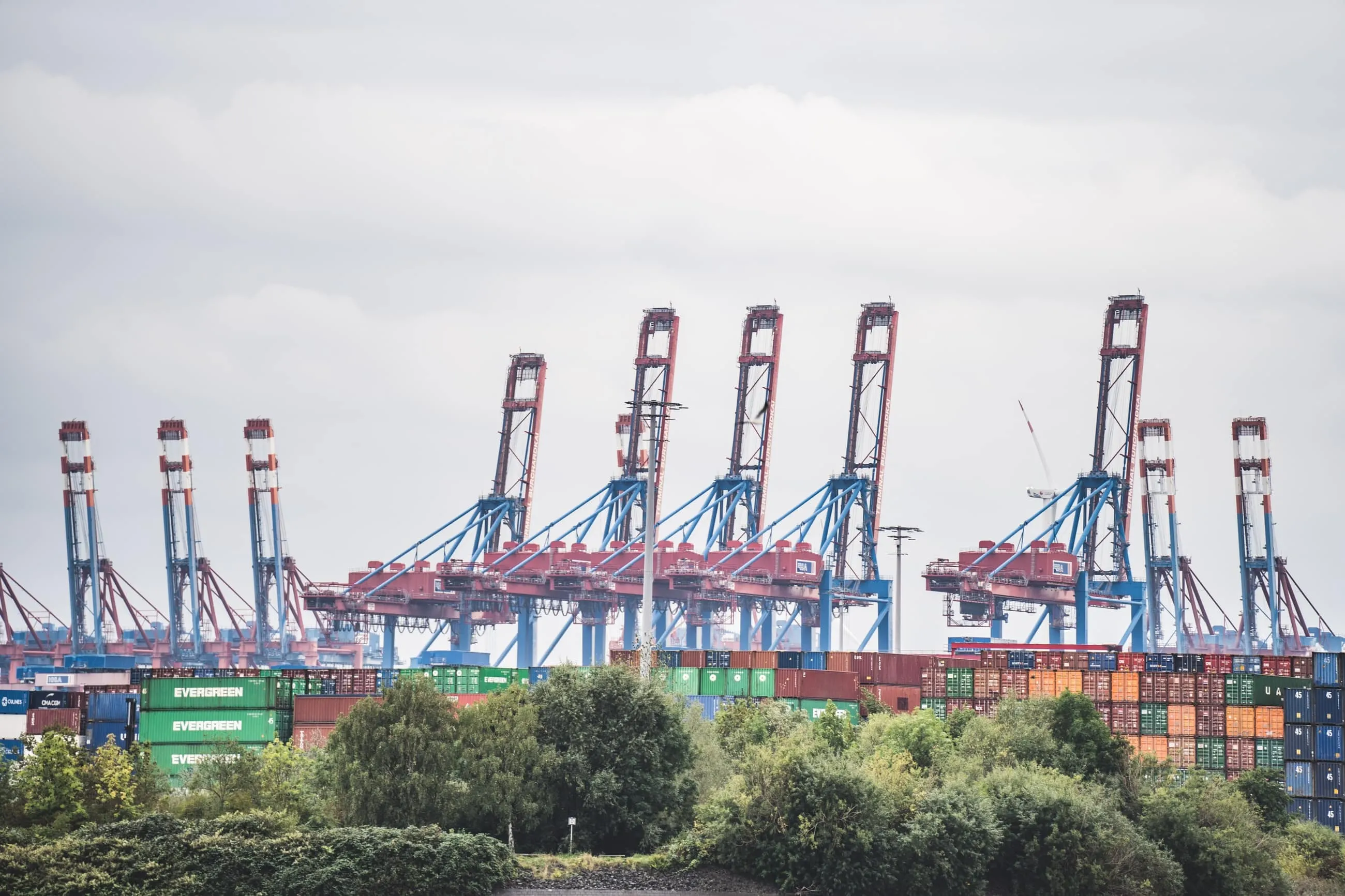
The Importance of Emissions Management in Supply Chain Sustainability
Ready to shift from compliance to competitive advantage?
Book a demo and see how SINAI can help you streamline data, meet requirements, and build stakeholder trust.

Transitioning to a net-zero carbon economy and achieving the goals of the Paris Agreement keeps governments, nations, and companies asking - how can we reduce carbon emissions as quickly as possible?
Most reputable and credible sustainability reporting frameworks provide best practices on how companies reduce carbon emissions through supply chain emissions management. Reaching net-zero emissions - where a company’s supply chain doesn’t lead to increased carbon emissions or any other greenhouse gas (GHG) emissions - is one of the Science Based Targets initiative’s (SBTi) guiding principles, for example.
If you are looking to optimize your firm’s supply chain decarbonization, take a look at SINAI’s three ways to boost your supply chain carbon emissions management. Here, we deep dive into the importance of supply & value chain emissions management.
What are supply chain emissions?

Scope 3 emissions - also referred to as supply chain emissions - result from activities not directly owned or controlled by your company but that your company indirectly impacts through its supply chain. In other words, scope 3 emissions include all sources not within your company’s scope 1 and 2 boundaries. The scope 3 emissions for one firm are the scope 1 and 2 emissions of another firm. More often than not, scope 3 emissions represent the majority of your company’s total GHG emissions.
Scope 3 emissions divide into 15 categories, though not every category will be relevant to your firm. Scope 3 emission sources include emissions from both your company's upstream and downstream operational activities.
According to the GHG Corporate Protocol, all firms should quantify scope 1 and 2 emissions when reporting and disclosing their GHG emissions, while scope 3 emissions reporting is not mandatory. However, many firms are taking a look into their value chain to understand the complete GHG impact of their operations and doubling down on value/ supply chain management.
In addition, because scope 3 emission sources most likely represent the majority of your firm’s GHG emissions, they often present sound emissions reduction opportunities. Although these emissions are not under your company’s direct control, you may be able to positively impact the activities that result in these harmful CO2 emissions. Your company may also influence your suppliers or choose which vendors to offer contracts to based on their practices.
Examples of supply chain emissions
The purpose of value chain is to provide value to your customers through iterative activities that create your product or service. Below is a list of the four most common emission sources within a company’s value chain:
- Upstream Transportation and Distribution
- Downstream Transportation and Distribution
- Waste Generated in Operations
- End-of-life treatment of sold products
When striving to achieve supply chain deep decarbonization, your firm should consider maintaining a robust picture of emissions, a detailed carbon baseline, and an automated GHG inventory, to name a few key actions.
Why is supply chain emissions management important?
Significant supply chain decarbonization is rapidly becoming a “must-have” instead of a “nice to have,” and firms wanting to take the lead in the fight against climate change must face challenges on the path to net-zero.
McKinsey explains as companies accelerate their decarbonization efforts, they will need to overcome five key challenges:
- Insufficient carbon accounting foundations.
- A dependence on secondary data for Scope 3 emissions.
- Unreliable costings and technical feasibility of carbon reduction levers.
- The need for industry-wide collaboration to address several emissions sources.
- Consistent internal and external stakeholder engagement.

Reaching science-based emissions reduction targets in your supply chain
Reducing carbon emissions in your value chain can be simplified by choosing a software solution that helps engage suppliers while finding opportunities to meet your firm’s deep decarbonization goals.
SINAI has developed the world’s first decarbonization platform, making it possible for your company to measure, analyze, price, and reduce harmful GHG emissions quickly and easily. View emissions data across your entire value chain through one easy-to-use and accessible platform. Engaging suppliers and customers when it comes to carbon accounting and reductions efforts can be a formidable barrier to overcome. Our software boosts engagement while helping your firm connect the dots of your value chain’s emissions data, making it easier to make decisions backed by robust data.

You’ll be able to invite and manage each of your supplier’s emissions data throughout the year with just a click of your mouse. Further, SINAI allows your firm to utilize sophisticated scope 3 carbon accounting tools that will help you better analyze the impact of your value chain. We can also assist in making sure your company’s suppliers are sharing the correct data with you, setting you on the right pathway towards deep decarbonization.
To test run our value chain management functionality for yourself, contact us today for a demo of our software and take the first step in achieving meaningful and credible supply chain decarbonization.



'%3e%3cg id='Final-Copy-2_2_' transform='translate(1275.000000, 200.000000)'%3e%3cpath class='st0' d='M7.4,12.8h6.8l3.1-11.6H7.4C4.2,1.2,1.6,3.8,1.6,7S4.2,12.8,7.4,12.8z'/%3e%3c/g%3e%3c/g%3e%3c/g%3e%3cg id='final---dec.11-2020'%3e%3cg id='_x30_208-our-toggle' transform='translate(-1275.000000, -200.000000)'%3e%3cg id='Final-Copy-2' transform='translate(1275.000000, 200.000000)'%3e%3cpath class='st1' d='M22.6,0H7.4c-3.9,0-7,3.1-7,7s3.1,7,7,7h15.2c3.9,0,7-3.1,7-7S26.4,0,22.6,0z M1.6,7c0-3.2,2.6-5.8,5.8-5.8 h9.9l-3.1,11.6H7.4C4.2,12.8,1.6,10.2,1.6,7z'/%3e%3cpath id='x' class='st2' d='M24.6,4c0.2,0.2,0.2,0.6,0,0.8l0,0L22.5,7l2.2,2.2c0.2,0.2,0.2,0.6,0,0.8c-0.2,0.2-0.6,0.2-0.8,0 l0,0l-2.2-2.2L19.5,10c-0.2,0.2-0.6,0.2-0.8,0c-0.2-0.2-0.2-0.6,0-0.8l0,0L20.8,7l-2.2-2.2c-0.2-0.2-0.2-0.6,0-0.8 c0.2-0.2,0.6-0.2,0.8,0l0,0l2.2,2.2L23.8,4C24,3.8,24.4,3.8,24.6,4z'/%3e%3cpath id='y' class='st3' d='M12.7,4.1c0.2,0.2,0.3,0.6,0.1,0.8l0,0L8.6,9.8C8.5,9.9,8.4,10,8.3,10c-0.2,0.1-0.5,0.1-0.7-0.1l0,0 L5.4,7.7c-0.2-0.2-0.2-0.6,0-0.8c0.2-0.2,0.6-0.2,0.8,0l0,0L8,8.6l3.8-4.5C12,3.9,12.4,3.9,12.7,4.1z'/%3e%3c/g%3e%3c/g%3e%3c/g%3e%3c/g%3e%3c/svg%3e)