
Como modelar e avaliar projetos de descarbonização lucrativos com uma MACC
Ready to shift from compliance to competitive advantage?
Book a demo and see how SINAI can help you streamline data, meet requirements, and build stakeholder trust.

Todo esforço de descarbonização acaba esbarrando no mesmo obstáculo. Quais projetos merecem o capital? Quais trazem retorno? Quais podem esperar? A descarbonização com custo-benefício é a forma como as equipes de clima respondem a essas perguntas, e a curva de custo marginal de abatimento, ou MACC, é a ferramenta que a maioria delas utiliza atualmente.
A pressão para acertar essas decisões continua aumentando nas equipes de sustentabilidade. A AIE estima que o investimento em energia em seu cenário de emissões líquidas zero precise subir para cerca de 4,8 trilhões de dólares por ano na próxima década, em comparação com os 3,3 trilhões de dólares atuais. A Pesquisa Global de Descarbonização Corporativa de 2025 da Verdantix quantificou essa pressão: 41% das empresas consideram a pressão competitiva e as preocupações com custos riscos significativos para suas metas climáticas de curto prazo.
"As empresas estão começando a perceber o que é realista e o que não é, à medida que consideram destinar capital para iniciativas de descarbonização." – Pesquisa Global de Descarbonização Corporativa de 2025 da Verdantix.
Essa é a transição da ambição de emissões líquidas zero para a descarbonização lucrativa. A lógica é a mesma de qualquer questão de alocação de capital. Identifique os projetos que trazem retorno, execute-os primeiro e o restante da estratégia se torna mais barato de financiar. Isso vale até mesmo para empresas que recuaram em compromissos formais de emissões líquidas zero. A descarbonização operacional continua avançando porque o argumento financeiro se sustenta por si só.
Descarbonização Lucrativa
Este é o segundo artigo da minha série sobre Descarbonização Lucrativa. O primeiro abordou como construir o business case para investimentos climáticos e obter o alinhamento do CFO em todos os três escopos. Este artigo aprofunda um nível: uma vez que a liderança esteja alinhada, como você decide quais projetos realmente merecem o capital?
Como uma MACC ajuda a decidir quais projetos merecem investimento
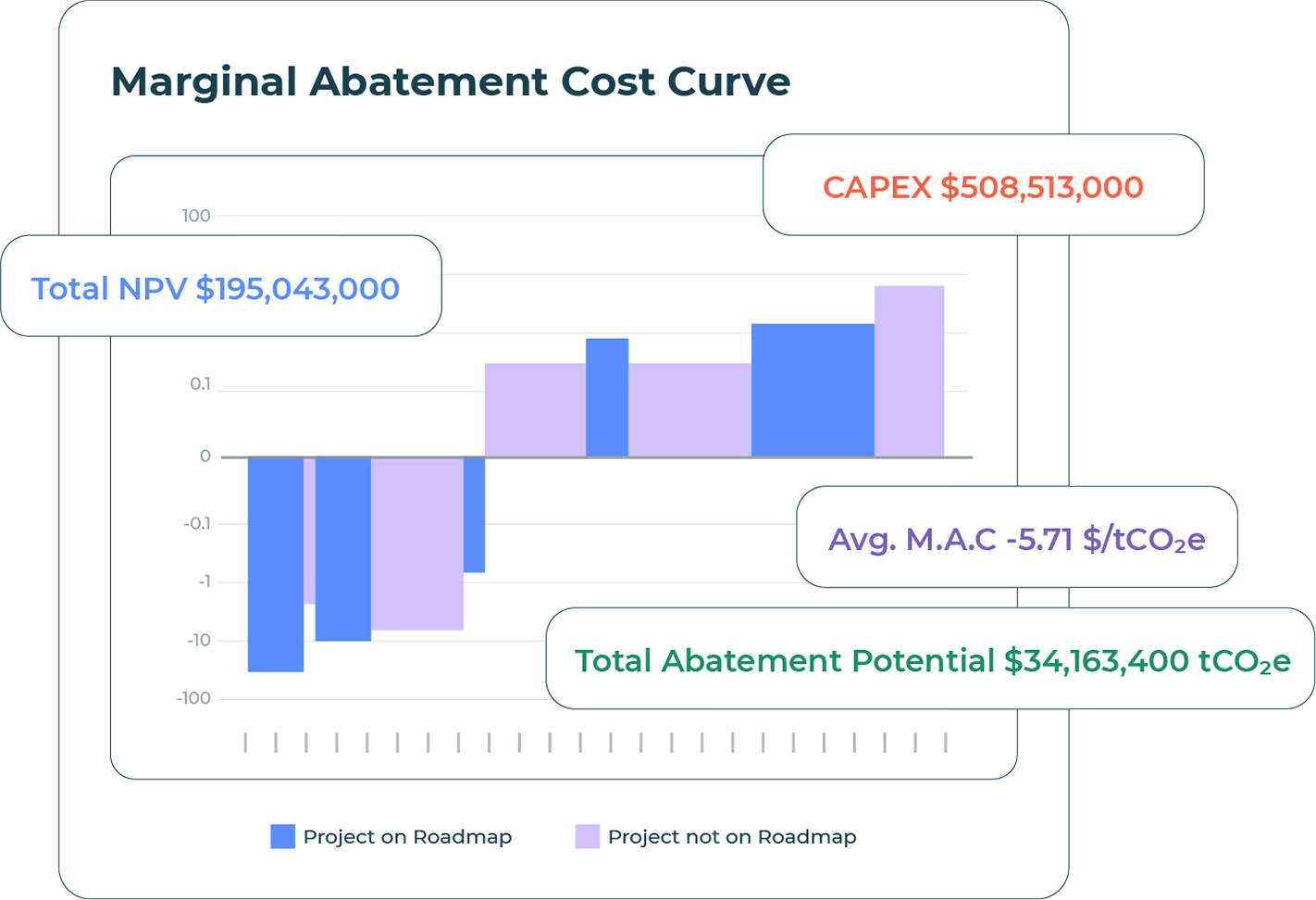
Uma MACC é um gráfico que lista todos os projetos de descarbonização que uma empresa poderia executar e os classifica pelo custo para remover 1 tonelada de CO2e. Quanto mais larga a barra, mais emissões aquele projeto pode reduzir. Quanto mais baixa a barra estiver, mais barato é o abatimento.
A McKinsey criou a primeira para uma concessionária sueca em 2007. Desde então, a estrutura foi adotada pelo Comitê sobre Mudanças Climáticas do Reino Unido, pelo WBCSD e pela maioria dos planejadores climáticos corporativos.
O que torna uma MACC útil é a ordem. As toneladas mais baratas aparecem à esquerda, geralmente eficiência energética e eletrificação. As mais caras ficam à direita. Alguns projetos apresentam custos negativos, o que significa que economizam dinheiro para a empresa ao longo de sua vida útil. Outros custam dólares reais por tonelada. Uma curva de custo marginal de abatimento é o que transforma um acúmulo de ideias de projetos em um plano de capital que um CFO realmente analisará.
Quais dados devem ser modelados antes de calcular o custo de abatimento
Uma MACC é tão boa quanto os dados por trás dela. Três entradas são fundamentais: dados de atividade no nível da instalação ou equipamento (kWh, litros de combustível, vazamento de refrigerante), o custo para executar o projeto (CAPEX, OPEX, financiamento) e o volume de abatimento que cada projeto entregará em relação a uma linha de base.
A Verdantix afirma isso claramente em seu relatório de fevereiro de 2026, Future of Digital Decarbonization Technology: "dados de atividade são fundamentais." Sistemas focados em relatórios não foram criados para apoiar decisões de investimento. Sem dados de atividade granulares, os resultados da MACC colapsam em médias que escondem os projetos que realmente valem o investimento.
Sem dados de atividade granulares, os resultados da MACC colapsam em médias que escondem os projetos que realmente valem o investimento. Esses dados precisam ser obtidos no nível da instalação, mapeados para a categoria de emissões correta e atualizados de forma recorrente. As contas de serviços públicos estão entre as fontes mais comuns de lacunas: formatos inconsistentes, múltiplos fornecedores e uploads manuais criam erros antes mesmo de a modelagem começar.
Como definir a linha de base de emissões para cada projeto
A linha de base é uma previsão de como seriam as emissões caso o projeto não fosse realizado, modelada ao longo de sua vida útil. Ela deve considerar o consumo de energia dos equipamentos, os volumes de produção esperados, os fatores de emissão da rede que mudam com o tempo (a rede elétrica está se tornando mais limpa na maioria das regiões) e quaisquer mudanças regulatórias que alterem as regras do jogo. Se a linha de base estiver errada, toda a curva será enganosa.
Como calcular se um projeto é economicamente viável
A fórmula é simples: o custo marginal de abatimento é igual ao custo líquido anualizado do projeto dividido pelas toneladas de CO2e evitadas durante a vida útil do projeto. Números negativos significam que o projeto se paga. Números positivos indicam quanto você está pagando por tonelada para viabilizá-lo.
A maioria dos CFOs desejará mais do que apenas um número. Cada projeto também precisa de VPL, TIR, prazo de retorno e cronograma de CAPEX/OPEX. Estes são os mesmos testes financeiros que as equipes financeiras já aplicam a todos os outros projetos de capital. É para isso que o software de planejamento financeiro climático foi desenvolvido. O custo de abatimento precisa ser conciliado com o fluxo de caixa, a depreciação e as prioridades de capital concorrentes, caso contrário, não será aprovado na reunião de orçamento.
Como comparar economias de curto prazo com o valor da descarbonização de longo prazo
Toneladas baratas hoje nem sempre são as toneladas certas. Uma modernização na iluminação tem retorno rápido, mas remove apenas uma pequena parcela das emissões totais. Uma mudança de combustível ou a eletrificação de processos exige mais capital inicial e um prazo de retorno mais longo. A compensação é que isso elimina o tipo de emissão que realmente faz a diferença nas metas de longo prazo.
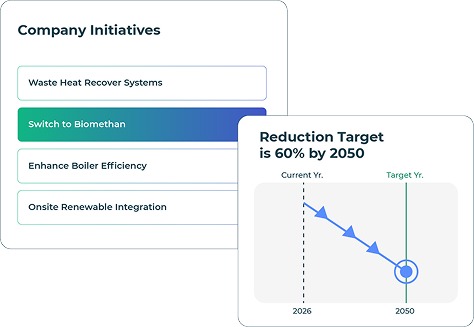
A modelagem de cenários é a forma como as equipes conciliam os dois aspectos. O exercício compara as emissões do cenário atual com trajetórias de redução que variam em ritmo, mix tecnológico e premissas de preço de carbono. A McKinsey destaca um ponto semelhante sobre as MACC dinâmicas. Uma curva congelada em um único momento torna-se obsoleta rapidamente. Uma MACC que se atualiza à medida que as redes se descarbonizam, os custos de tecnologia caem e as políticas mudam, conta uma história mais honesta sobre o que vale a pena financiar.
Como os resultados da MACC devem alimentar um plano de transição climática
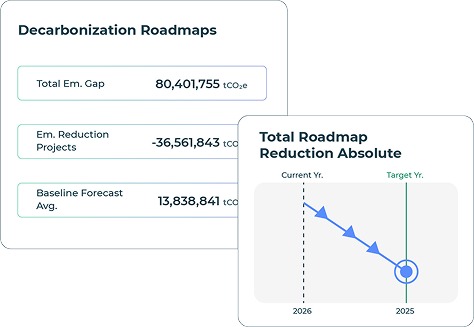
Uma MACC é uma ferramenta de priorização, não uma estratégia. O resultado é uma lista classificada de projetos de redução de carbono com ROI positivo e potencial real de abatimento. Essa lista precisa ser integrada a um plano de transição climática mais amplo que defina sequenciamento, financiamento, responsabilidade pelos projetos e anos-alvo. O software de planejamento de transição climática fecha o ciclo ao conectar a MACC à execução em nível de instalação, ao engajamento de fornecedores e ao reporte em conformidade com estruturas como SBTi e CSRD.
Esta é a camada operacional que a Verdantix descreve como o futuro da tecnologia de descarbonização. O planejamento de investimentos caminha lado a lado com o reporte, com dados de atividades fluindo de sistemas de energia, edifícios e cadeia de suprimentos.
O módulo Reduce da SINAI foi criado para isso. A plataforma foi reconhecida no relatório Smart Innovators de agosto de 2025 da Verdantix por sua modelagem de MACC líder de mercado. Ela combina recomendações de projetos impulsionadas por IA com MACCs em nível de instalação e modelagem de VPL, TIR, prazo de retorno e CAPEX/OPEX do projeto, integrando esses resultados em um plano de transição climática personalizado. Natura, a marca global de cosméticos, utiliza a plataforma para traçar um caminho economicamente viável rumo à sua meta de emissões líquidas zero até 2030. Essa é a ponte entre uma apresentação de slides e um roteiro financiado, onde a descarbonização eficiente se transforma, naturalmente, em descarbonização lucrativa.
Veja na prática: Agende uma demonstração do SINAI Reduce para ver a modelagem MACC em nível de instalação e um plano de transição climática pronto para financiamento em ação.





%20(1).png)



'%3e%3cg id='Final-Copy-2_2_' transform='translate(1275.000000, 200.000000)'%3e%3cpath class='st0' d='M7.4,12.8h6.8l3.1-11.6H7.4C4.2,1.2,1.6,3.8,1.6,7S4.2,12.8,7.4,12.8z'/%3e%3c/g%3e%3c/g%3e%3c/g%3e%3cg id='final---dec.11-2020'%3e%3cg id='_x30_208-our-toggle' transform='translate(-1275.000000, -200.000000)'%3e%3cg id='Final-Copy-2' transform='translate(1275.000000, 200.000000)'%3e%3cpath class='st1' d='M22.6,0H7.4c-3.9,0-7,3.1-7,7s3.1,7,7,7h15.2c3.9,0,7-3.1,7-7S26.4,0,22.6,0z M1.6,7c0-3.2,2.6-5.8,5.8-5.8 h9.9l-3.1,11.6H7.4C4.2,12.8,1.6,10.2,1.6,7z'/%3e%3cpath id='x' class='st2' d='M24.6,4c0.2,0.2,0.2,0.6,0,0.8l0,0L22.5,7l2.2,2.2c0.2,0.2,0.2,0.6,0,0.8c-0.2,0.2-0.6,0.2-0.8,0 l0,0l-2.2-2.2L19.5,10c-0.2,0.2-0.6,0.2-0.8,0c-0.2-0.2-0.2-0.6,0-0.8l0,0L20.8,7l-2.2-2.2c-0.2-0.2-0.2-0.6,0-0.8 c0.2-0.2,0.6-0.2,0.8,0l0,0l2.2,2.2L23.8,4C24,3.8,24.4,3.8,24.6,4z'/%3e%3cpath id='y' class='st3' d='M12.7,4.1c0.2,0.2,0.3,0.6,0.1,0.8l0,0L8.6,9.8C8.5,9.9,8.4,10,8.3,10c-0.2,0.1-0.5,0.1-0.7-0.1l0,0 L5.4,7.7c-0.2-0.2-0.2-0.6,0-0.8c0.2-0.2,0.6-0.2,0.8,0l0,0L8,8.6l3.8-4.5C12,3.9,12.4,3.9,12.7,4.1z'/%3e%3c/g%3e%3c/g%3e%3c/g%3e%3c/g%3e%3c/svg%3e)